



10 minute read · Craft360 Australia
Plant butters are among the most satisfying ingredients to work with in cosmetic formulation. They are rich, naturally derived, and deeply conditioning and they can completely transform a product's texture, feel, and performance. But if you have ever wondered why your body butter turned rock-hard, or why your lip balm went soft and squishy in your pocket, the answer almost always comes back to one thing: the butters you used, and whether their melting points suited your formulation.
This guide is a general educational overview of what makes a butter hard or soft, why that distinction matters in formulation, and how each of the butters available through Craft360's range is commonly used by formulators. Always refer to your supplier's documentation and applicable safety data when making formulation decisions.
What Makes a Butter Hard or Soft?
All plant butters are extracted from seeds, kernels, or nuts, much like carrier oils. The reason they are solid at room temperature (while most carrier oils are liquid) comes down to their fatty acid composition, specifically the ratio of saturated to unsaturated fatty acids.
Saturated fatty acids have a straight molecular chain that allows them to pack tightly together, which means they tend to solidify at room temperature and are associated with higher melting points. Butters that are higher in saturated fatty acids are generally firm, hard, and waxy in character.
Unsaturated fatty acids have a bent or kinked molecular chain that prevents them from packing as tightly, so they tend to remain softer and more pliable at room temperature. Butters higher in unsaturated fatty acids are typically semi-solid, scoopable, and easy to spread.
This is why cocoa butter tends to feel like a firm block while shea butter feels like soft, creamy putty, even though both are plant-derived butters. The practical consequence for formulators is significant: the melting point of a butter, which is closely related to its fatty acid composition, is a primary factor determining the texture of a finished product. Understanding this relationship is central to formulating products that perform consistently, particularly in the context of Australia's variable and often warm climate.
Melting point ranges cited throughout this article are general reference values commonly used in cosmetic formulation literature. Always verify values with your specific supplier's documentation, as they may vary between sources and grades.
Hard Butters vs Soft Butters at a Glance
|
Butter |
Type |
Approx. Melting Point* |
Texture at Room Temp |
Feels Like |
|
Hard |
~34°C – 38°C |
Firm, brittle block |
Chocolate bar |
|
|
Hard |
~34°C – 38°C |
Firm, brittle block |
Chocolate bar (neutral scent) |
|
|
Soft |
~28°C – 35°C |
Semi-solid, scoopable |
Soft putty |
|
|
Soft |
~28°C – 35°C |
Semi-solid, scoopable |
Soft putty (white, odourless) |
Melting point values are approximate reference ranges from cosmetic formulation literature. Actual values may vary depending on the supplier, grade, and batch. Always consult your supplier's technical documentation.
Hard Butters
Hard butters are solid and firm at room temperature. Their higher melting points mean they contribute structure, stability, and firmness to formulations. Without a hard butter, many products, particularly body butters, lip balms, and solid lotion bars, may lose their shape, especially in warmer conditions.
Organic Cocoa Butter (Unrefined and Deodorised)
Organic Cocoa Butter Unrefined and Organic Cocoa Butter Deodorised are both extracted from the seeds of Theobroma cacao.
Melting point: Approximately 34°C to 38°C, just above skin temperature, which is associated with a pleasant melt-on-skin experience.
Fatty acid profile: Cocoa butter is high in stearic acid (approximately 34–35%), oleic acid (approximately 34–35%), and palmitic acid (approximately 25–26%), as commonly cited in cosmetic ingredient literature. The high stearic and palmitic content is what gives it its firm, brittle character at room temperature.
How it may feel on skin: Cocoa butter is generally described as rich and protective in cosmetic literature. It melts on contact with skin warmth and is associated with leaving a light, conditioning film on the skin surface. Due to its relatively low absorption rate compared to lighter oils, it is considered more occlusive than fast-absorbing ingredients, meaning it tends to sit on the skin surface and condition it gradually rather than penetrating rapidly.
Scent: The unrefined version has a characteristic mild chocolate aroma, which is well-suited to body butter and lip balm formulations. The deodorised version has had its scent removed through a gentle processing method, making it a neutral base suitable for fragranced or essential-oil-driven formulations.
Commonly used in:
- Body butters — to provide firmness and structure, particularly important in warm Australian climates
- Lip balms — to give the balm its solid, structured form and smooth application
- Lotion bars and massage bars — to provide the solid bar format and a conditioning feel
General usage reference: Commonly cited in formulation literature at approximately 25–50% in body butter formulations, and approximately 20–40% in lip balms, depending on the desired firmness. These are general starting points only, always adjust based on your full formulation, testing, and finished product safety assessment.
Formulation notes:
Cocoa butter used at high percentages without balancing soft butters or liquid carrier oils can produce a product that is firmer than intended. In lip balms and body butters, pairing it with a soft butter and a carrier oil is a commonly recommended approach to help achieve a workable texture.
Cocoa butter is also associated with graininess if cooled too slowly or unevenly, a phenomenon linked to the behaviour of its stearic acid fraction during crystallisation. Melt it fully, combine thoroughly with your other ingredients, and cool rapidly (in the refrigerator) to help reduce the likelihood of large crystal formation. If a finished cocoa butter product feels sandy or gritty, re-melting and rapid cooling is the commonly recommended corrective approach.
Soft Butters
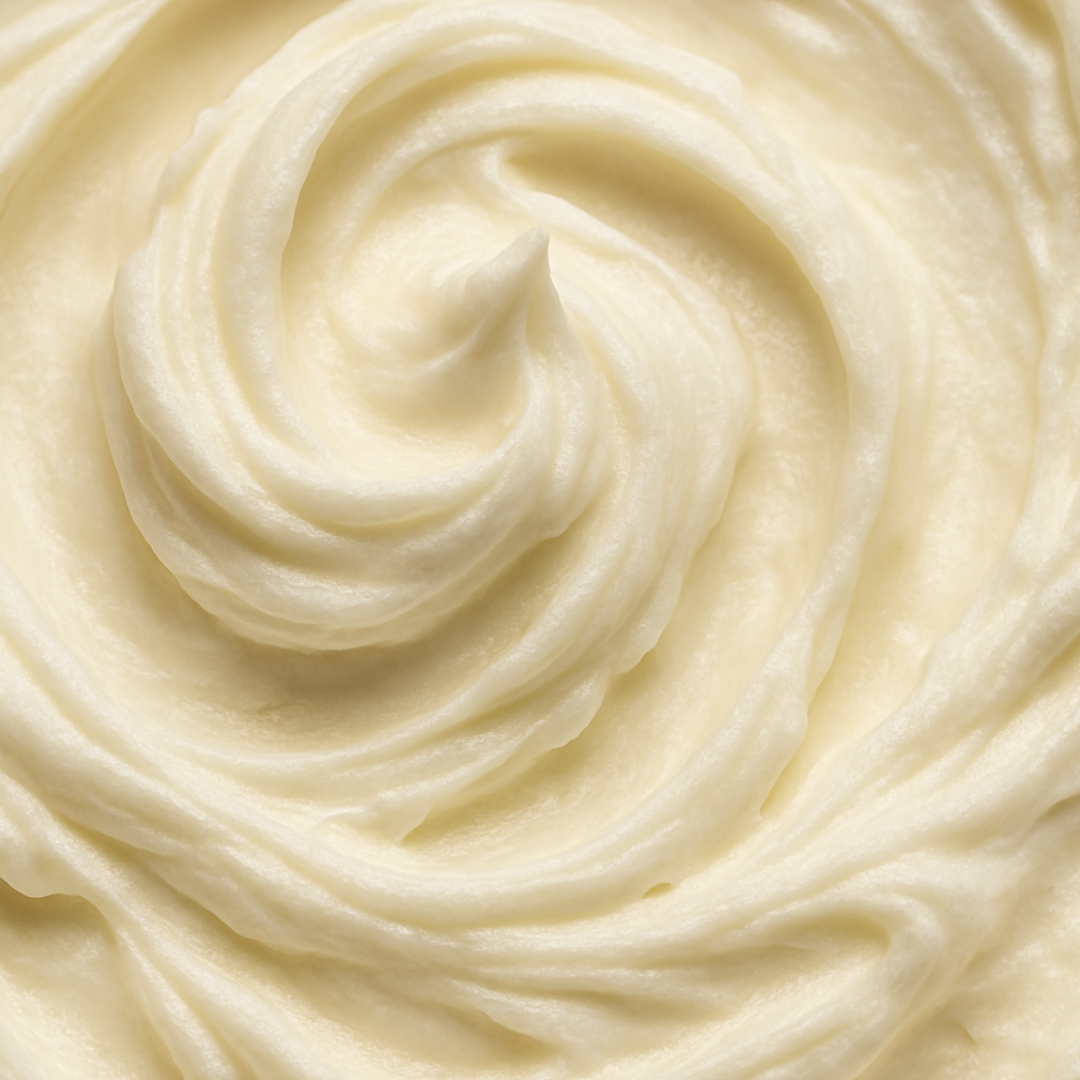
Soft butters are semi-solid and scoopable at room temperature. Their lower melting points and higher unsaturated fatty acid content contribute to their soft, yielding, creamy character. In many body butter formulations, soft butters form the primary base, contributing the majority of the skin-conditioning properties and the luxurious, spreadable texture.
Organic Shea Butter (Unrefined and Refined)
Organic Shea Butter Unrefined and Organic Shea Butter Refined are both extracted from the nut of Vitellaria paradoxa.
Melting point: Approximately 28°C to 35°C, scoopable and pliable at typical Australian room temperatures, and generally melts immediately on skin contact.
Fatty acid profile: Shea butter is commonly cited as containing approximately 40–50% oleic acid (omega-9), 35–45% stearic acid, and around 5–6% linoleic acid. The relatively high oleic acid content is associated with its soft, yielding texture and its ability to spread and absorb into the skin.
Unsaponifiable fraction: What is frequently noted as distinguishing shea butter in cosmetic literature, beyond its fatty acid profile, is its unsaponifiable fraction, the portion that is not fat, but rather plant sterols, triterpenes, tocopherols (vitamin E), and phenolic compounds. In shea butter, this fraction is commonly cited at approximately 5–17%, which is considered high relative to most vegetable fats (CIR, 2018). These compounds are associated with shea butter's widely referenced nourishing and conditioning properties in cosmetic formulation though specific claims about therapeutic effects on skin conditions should be avoided in product marketing under Australian TGA guidelines.
How it may feel on skin: Shea butter is generally described in cosmetic literature as creamy, rich, and deeply conditioning. It is associated with leaving the skin feeling soft and comfortable, and absorbs reasonably well for a butter.
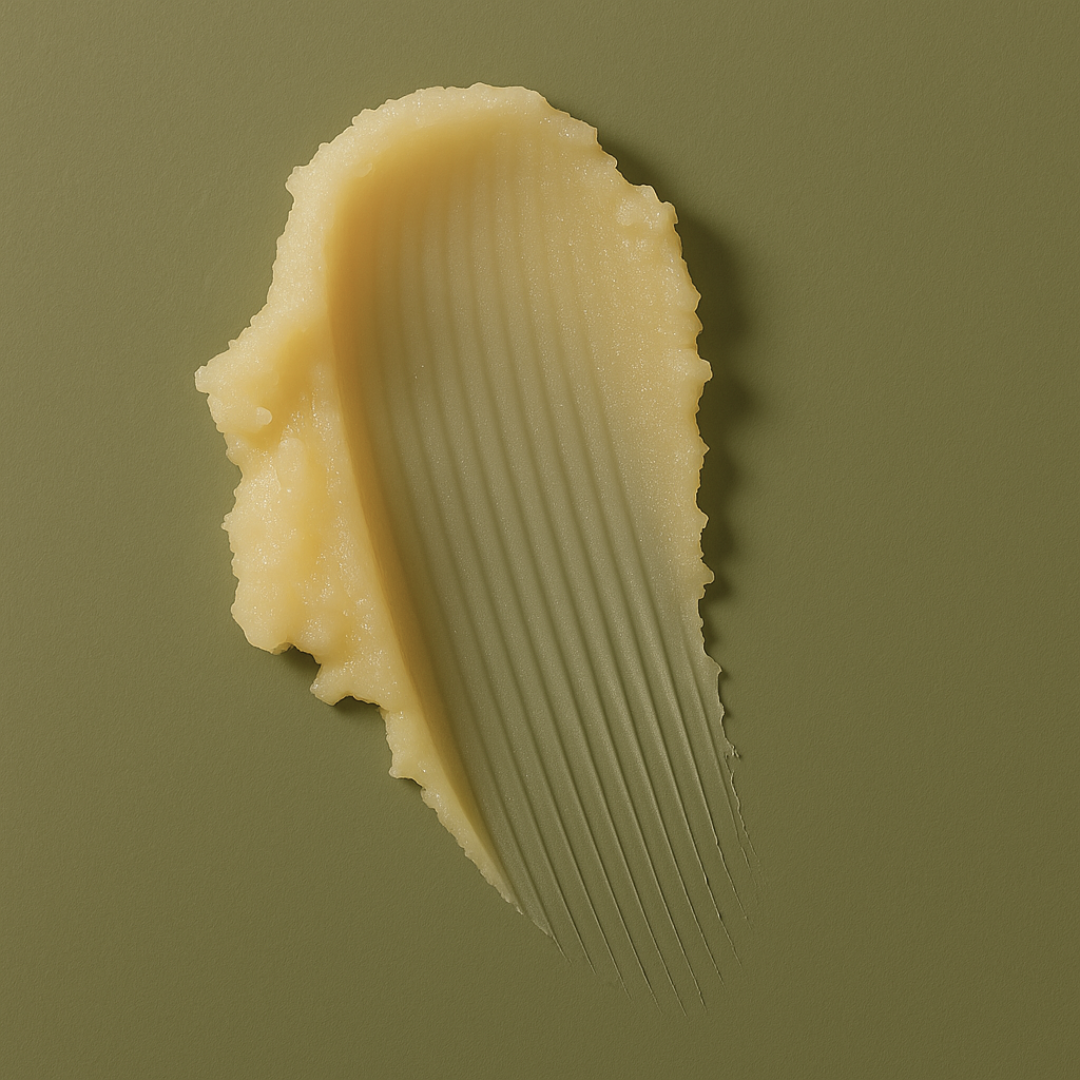
Scent: The unrefined version has a natural, mild nutty aroma and ranges in colour from ivory to pale yellow. The refined version is white and odourless, making it suited to formulations where scent neutrality is important.
Commonly used in:
- Body butters — as the primary soft butter base
- Whipped body butters — commonly cited as whipping well to a fluffy, mousse-like texture
- Lip balms — alongside a hard butter to contribute conditioning and softness
- Body scrubs — as a conditioning element
- Hair butters and hair masks
General usage reference: Commonly cited in formulation literature at approximately 30–70% in body butter formulations, and approximately 10–20% in lip balms alongside a hard butter. These are general starting points so always adjust based on your full formulation and testing.
Formulation notes:
Shea butter is also associated with graininess, and some formulators find it more prone to this than cocoa butter. This occurs when shea butter is melted and then allowed to cool slowly at room temperature, as certain fatty acid fractions crystallise at different rates. The approach widely recommended in formulation practice is to refrigerate the formulation immediately after combining melted butters, rather than allowing them to cool on the bench. Rapid cooling is associated with a smoother, more even texture. Whipping the butter after it has set in the refrigerator may also help break up forming crystals.
Why Balance Between Hard and Soft Butters Matters
Balancing hard and soft butters is one of the central formulation decisions in any butter-based product and the right balance will depend on your product format, your climate, and your target customer.
In a body butter, the goal is generally a product that is scoopable and spreadable, yet firm enough to hold its shape in a jar. A formulation using only soft butter may become too soft or lose its shape at typical Australian room temperatures, particularly in summer. A formulation using only hard butter may be difficult to scoop or apply. Pairing one hard butter with one soft butter, then using carrier oils to fine-tune consistency, is a commonly recommended starting framework in formulation literature, though the right proportions will depend on your specific ingredients and testing.
In a lip balm, texture requirements are more demanding. A lip balm needs to be firm enough to push up cleanly from a tube and resist melting in a pocket or bag, but soft enough to apply smoothly without feeling waxy or dragging on the lips. Formulating lip balms is a matter of finding the right balance between your hard butter, soft butter, and wax components and this almost always requires test batches to dial in.
The general starting point referenced in formulation literature is to pair one hard butter with one soft butter, using carrier oils to adjust the final texture. This provides a balanced base from which to test and refine.
The Australian Climate Factor
Australia's climate makes this balancing act particularly important for local makers.
Shea butter has a melting point of approximately 28°C to 35°C. In summer in Queensland, the Northern Territory, or Western Australia, ambient temperatures can readily approach or exceed this range, even indoors in certain conditions. A formulation developed for a cooler climate may perform very differently in an Australian summer, and products may soften, lose their shape, or separate if they have not been tested at relevant temperatures.
If you are formulating for the Australian market, testing your product at the highest temperature it is likely to encounter during storage, shipping, or use is strongly recommended, for example, in a warm car, on a retail shelf in summer, or in an unventilated bathroom. If the product softens too much, increasing the proportion of hard butter or incorporating a small amount of a stabilising wax such as beeswax or candelilla wax (commonly cited at 1–3% in formulation literature) may help improve stability. Always test any formula changes in a small batch first.
Formulation Notes Worth Keeping
Graininess is a common challenge with both cocoa butter and shea butter. It occurs when melted butters are cooled too slowly, allowing certain fatty acid fractions to crystallise unevenly. The approach widely referenced in formulation practice is to melt butters fully, combine them thoroughly, and then refrigerate the formulation immediately, rather than cooling at room temperature. Whipping after refrigeration may further help produce a smoother result.
Shelf life: Plant butters are generally associated with a natural shelf life of approximately 12–24 months, depending on the specific butter, storage conditions, and formulation. Adding an antioxidant to help protect against oxidative rancidity is widely recommended in formulation literature like vitamin E (tocopherol) at approximately 1% and rosemary CO2 extract at approximately 0.1–0.5% are commonly cited options. These are general reference points only; always follow your supplier's guidance and ensure your finished product has been assessed appropriately. Store finished products away from direct sunlight and heat.
Skin type consideration: Butter-based formulations are generally rich and occlusive in character, which is commonly associated with suitability for dry to very dry skin types. They may not be well-suited to oily or acne-prone skin, as the occlusive nature of the formulation may be too rich for those skin types. This is a general educational note that individual responses will vary, and a patch test is always recommended.
Ready to Start Formulating?
Browse all available butters and carrier oils at Craft360 and start building your formulations with confidence.
Shop All Butters at Craft360
Shop All Carrier Oils at Craft360
Want to put these ingredients straight to use? Follow one of our tried-and-tested body butter recipes using the butters from this guide:
👉 Create Your Own Botanical Body Butter: Two Warming Winter Blends
What is the difference between hard butters and soft butters in skincare?
Hard butters and soft butters differ primarily in their fatty acid composition and melting point. Hard butters, such as cocoa butter are higher in saturated fatty acids, which gives them a firm, solid character at room temperature and a higher melting point (approximately 34–38°C for cocoa butter). Soft butters, such as shea butter are higher in unsaturated fatty acids, which gives them a softer, scoopable texture and a lower melting point (approximately 28–35°C for shea butter). In formulation, hard butters contribute structure and stability, while soft butters contribute the creamy, spreadable character of the finished product. The right balance between the two depends on your product format, intended use, and climate.
Browse our full range of plant butters to find the right combination for your formulation.
What is shea butter used for in skincare formulations?
Shea butter (Vitellaria paradoxa) is widely used in cosmetic formulations as a soft butter base. It is commonly used in body butters, whipped body butters, lip balms, hair butters, body scrubs, and conditioning creams. In formulation literature, shea butter is noted for its relatively high unsaponifiable fraction, commonly cited at approximately 5–17%, which contains plant sterols, tocopherols, and triterpenes associated with its deeply conditioning properties. It is suitable for dry to very dry skin types and is available in both unrefined (natural scent, ivory-yellow colour) and refined (odourless, white) forms. Always refer to your supplier's documentation for specific technical data. Shop Organic Shea Butter — Unrefined and Refined →
What is cocoa butter used for in lip balms and body butters?
Cocoa butter (Theobroma cacao) is a hard butter widely used in lip balms, body butters, lotion bars, and massage bars. Its melting point of approximately 34–38°C means it melts on contact with skin warmth, and its high stearic and palmitic acid content gives it the firm, structured character that provides shape and stability to formulations. In lip balms, cocoa butter contributes the solid structure of the stick. In body butters, it provides firmness and helps the product hold its shape, which is particularly important in warm Australian conditions. It is available in unrefined (mild chocolate scent) and deodorised (neutral scent) forms. Shop Organic Cocoa Butter — Unrefined and Deodorised → .
How do you prevent graininess in shea butter and cocoa butter products?
Graininess in shea butter and cocoa butter products is caused by the uneven crystallisation of certain fatty acids when the melted butter cools too slowly. The approach widely recommended in cosmetic formulation practice is to melt butters fully, combine them thoroughly with the other formulation ingredients, and then cool the product rapidly by placing it in the refrigerator immediately, rather than allowing it to cool at room temperature. Whipping the butter after it has set in the refrigerator may also help produce a smoother, more even texture. If a finished product is already grainy, re-melting and rapidly cooling again is the commonly recommended corrective approach.
What is the best butter for a body butter formulation in Australia?
There is no single "best" butter, the most appropriate combination will depend on your formulation goals, climate, and target skin type. A commonly referenced starting framework in cosmetic formulation literature is to pair one hard butter (such as cocoa butter) with one soft butter (such as shea butter), then use carrier oils to adjust the final consistency. In Australia's warm climate, it is particularly important to test your formulation at the highest temperature it is likely to encounter during storage or use, as soft butters, particularly shea butter with a melting point of approximately 28–35°C can soften significantly in warm conditions. A small amount of stabilising wax (such as beeswax or candelilla wax at approximately 1–3%) may help improve heat stability if needed. Always test any formulation in a small batch first.
What is the difference between unrefined and refined shea butter?
Both unrefined and refined shea butter are extracted from the nut of Vitellaria paradoxa and have a broadly similar fatty acid profile. The key differences are:
- Unrefined shea butter is minimally processed, retaining its natural ivory-to-yellow colour and mild nutty aroma. It is generally considered to retain a higher proportion of its naturally occurring unsaponifiable compounds.
- Refined shea butter has been processed to remove the natural scent and colour, resulting in a white, odourless product. It is well-suited to formulations where a neutral base is needed, for example, when using fragrance oils or essential oils where the natural shea scent would be undesirable.
The choice between the two is largely a formulation preference. Always consult your supplier's documentation for specific technical data on the grade you are purchasing.
What is the difference between unrefined and deodorised cocoa butter?
Both are extracted from Theobroma cacao seeds and have a similar fatty acid profile and melting point. The key difference is scent:
- Unrefined cocoa butter retains its characteristic mild chocolate aroma, which can complement body butter, lip balm, and massage bar formulations.
- Deodorised cocoa butter has had the natural scent removed through a gentle steam process, making it a neutral base suited to fragranced or essential-oil-driven formulations where the natural chocolate scent would be undesirable.
Both perform similarly in terms of texture, structure, and skin feel. The choice is primarily driven by your intended scent profile.
Are plant butters suitable for all skin types?
Plant butters are generally rich and occlusive in character, which is commonly associated in cosmetic literature with suitability for dry to very dry skin types. They are not typically recommended as the primary ingredient in formulations for oily or acne-prone skin, as the occlusive nature of butter-based products may be too rich for those skin types. This is a general educational guide only, individual responses to ingredients can vary considerably. A patch test is always recommended before introducing any new product. If you have specific skin concerns, consult a qualified dermatologist or healthcare professional.
Browse all butters and carrier oils at Craft 360 →
How do you extend the shelf life of plant butter formulations?
Plant butters are susceptible to oxidative rancidity over time, which can affect both the scent and performance of the finished product. Adding an antioxidant is widely recommended in cosmetic formulation literature to help protect against oxidation. Commonly referenced options include vitamin E (tocopherol) at approximately 1% and rosemary CO2 extract at approximately 0.1–0.5%, though these are general reference points only, and effectiveness will vary depending on the formulation. Store all plant butters and finished butter-based products in cool, dark conditions away from direct sunlight and heat, and label batches with the date of manufacture. Always follow your supplier's specific guidance on shelf life and storage.
Where can I buy shea butter and cocoa butter in Australia?
Craft360 is an Australian supplier of raw ingredients for DIY makers and skincare brand owners. Their range includes Organic Shea Butter Unrefined, Organic Shea Butter Refined, Organic Cocoa Butter Unrefined, and Organic Cocoa Butter Deodorised. Browse the full range of butters and carrier oils at craft360.com.au/collections/butters. When purchasing cosmetic-grade butters, look for suppliers who provide technical documentation, fatty acid profiles, and safety data for each ingredient.
References
Cosmetic Ingredient Review (CIR). (2018). Safety Assessment of Shea Butter as Used in Cosmetics. https://www.cir-safety.org
Cosmetic Ingredient Review (CIR). (2018). Safety Assessment of Fatty Acids and Fatty Acid Salts as Used in Cosmetics. https://www.cir-safety.org/sites/default/files/facids122018tent.pdf
Mehta, D. et al. (2024). A comprehensive review of plant-based cosmetic oils: chemical and biological properties and their cosmeceutical applications. ACS Omega. https://pubs.acs.org/doi/10.1021/acsomega.4c04277
Yang, L. et al. (2020). A review of fatty acids influencing skin condition. Journal of Cosmetic Dermatology. https://onlinelibrary.wiley.com/doi/10.1111/jocd.13616
Maranz, S., Wiesman, Z., & Garti, N. (2003). Phenolic constituents of shea (Vitellaria paradoxa) kernels. Journal of Agricultural and Food Chemistry, 51(21), 6268–6273.
ScienceDirect Topics: Cocoa Butter. https://www.sciencedirect.com/topics/food-science/cocoa-butter
International Fragrance Association (IFRA). (2023). IFRA Standards — 51st Amendment. https://ifrafragrance.org
The information on this page is provided for general educational purposes only and is not intended as medical, veterinary, toxicological, cosmetic formulation, or regulatory advice. Nothing on this page should be interpreted as a substitute for advice from a qualified healthcare professional, cosmetic chemist, or regulatory specialist. If you have questions about ingredient use, formulation safety, or regulatory compliance, you should seek guidance from an appropriately qualified professional. Users are responsible for ensuring that any products they create, use, or sell comply with all applicable laws, regulations, and safety requirements in their jurisdiction. Craft 360 accepts no responsibility for the misuse of ingredients or for formulations developed based on the information provided.